

Foley Catheter Education
This page provides essential information to help reduce infection risk and ensure proper catheter care. Staying informed and involved in your care plays a key role in your recovery and well-being.
This resource is intended to supplement information from your healthcare provider. For further details or personalized advice, always follow the guidance of your healthcare professional and the product Instructions for Use (IFU) to ensure safe use.
The information on this website is for informational and educational purposes only and should not be considered medical advice or a treatment recommendation. For guidance specific to your health, contact a healthcare professional.
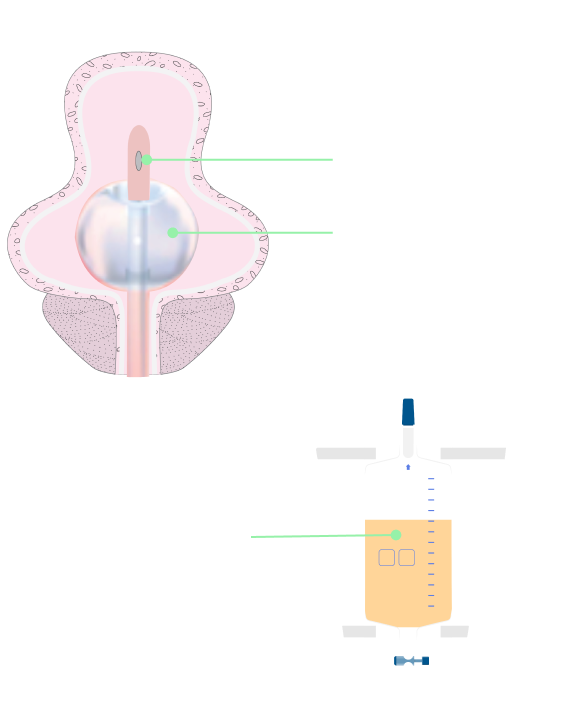
About Your Urinary Catheter
A Foley catheter is a thin, flexible tube placed in the bladder. The Foley
catheter drains urine (pee) through the drainage tube into a collection/urine bag.
With a Foley catheter, it is possible for germs to enter the urinary
tract and cause infection -this is called a catheter-associated
urinary tract infection (CAUTI).
Caring for a Foley catheter is a partnership between you and your
healthcare team. Part of this partnership means knowing when to reach
out if symptoms appear. If you develop a fever or notice blood in your
urine, or if urinating becomes painful or uncomfortable, it’s a sign to act. Sometimes, even after the catheter is removed, you might feel the need
to urinate more often or urgently—another clue your healthcare provider should know about without delay. Early detection and treatment are key
to preventing complications.
Tell your healthcare provider right away if you experience symptoms
that may be associated with an infection. Symptoms may include:
- Fever, bloody urine, burning, or painful urination
- Frequent or urgent urinating after catheter removal
Minimize Your infection Risk
The Foley catheter is designed to help your body, but it needs your attention to work safely. Simple habits including careful handling and monitoring can help keep infections at bay. Maintaining cleanliness and the right position for your catheter and drainage bag helps urine flow smoothly, supporting your health and comfort every day.
AVOID TOUCHING

Don’t touch the catheter, but if you need to, clean your hands before and after. Avoid tugging, pulling, twisting or kinking the tubing.
CHECK SECUREMENT
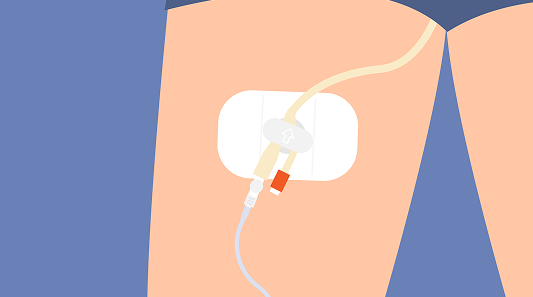
Make sure the catheter is secured to your leg or abdomen. Never disconnect the catheter from the tubing.
CHECK PLACEMENT
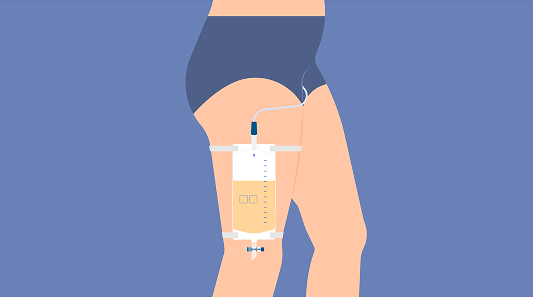
Keep the urine bag below the level of your bladder and the tubing straight, without loops. Always ensure urine is flowing freely into the urine bag.
CONFIRM NEED

Ask your healthcare provider every day if you still need your Foley catheter.
- Centers for Disease Control and Prevention. (2024). Summary of recommendations from the guideline for prevention of catheter-associated urinary tract infections (CAUTIs). https://www.cdc.gov/infection-control/hcp/cauti/summary-of-recommendations.html
- Association for Professionals in Infection Control and Epidemiology. (2025). Guide to preventing catheter-associated urinary tract infections. https://apic.org/implementation_guide/new-guide-to-preventing-catheter-associated-urinary-tract-infections-2025/
- Centers for Disease Control and Prevention. (2025). Preventing catheter-associated urinary tract infections (CAUTIs). U.S. Department of Health and Human Services. https://www.cdc.gov/uti/hcp/clinical-safety/index.html
- Alanazi, A. D., AlShammari, T. A., & Althobaiti, N. S., et al. (2023). Healthcare workers’ compliance with the catheter-associated urinary tract infection prevention guidelines. BMC Infectious Diseases, 23(1), Article 1107. https://doi.org/10.1186/s12879-023-08137-y
- Centers for Disease Control and Prevention. (2025). Urinary tract infection prevention and surveillance: Catheter-associated urinary tract infection (CAUTI) 104-508 (NHSN Patient Safety Component Manual). U.S. Department of Health and Human Services.
https://www.cdc.gov/nhsn/pdfs/pscmanual/7psccauticurrent.pdf