Effective bladder management strategies rely on more than knowledge—they depend on consistent, confident practice. When every clinician performs with skill and alignment, the result is safer care, reduced variation, and stronger outcomes for patients and teams alike.
The TruAdvance 4P Urological Solution—designed for simplicity, care standardization, and infection prevention—includes a comprehensive suite of support resources. A practical library offers training videos alongside real-time guidance tools for risk awareness, daily practice, and CAUTI prevention. Together, these tools help teams apply the framework at the bedside, refine techniques, stay aligned with evidence-based best practices, and sharpen skills for more uniform performance and consistently high-quality care.
Our Commitment to Comprehensive Bladder Management Care
Discover how our comprehensive bladder management model drives consistent, seamless care across the healthcare continuum. Built on tailored solutions for acute, post acute, specialty clinics, and home settings, our approach empowers clinician, patients, and caregivers through practical frameworks, specialized products, and support resources.
ACUTE CARE
TruAdvance 4P™ Urological Solution
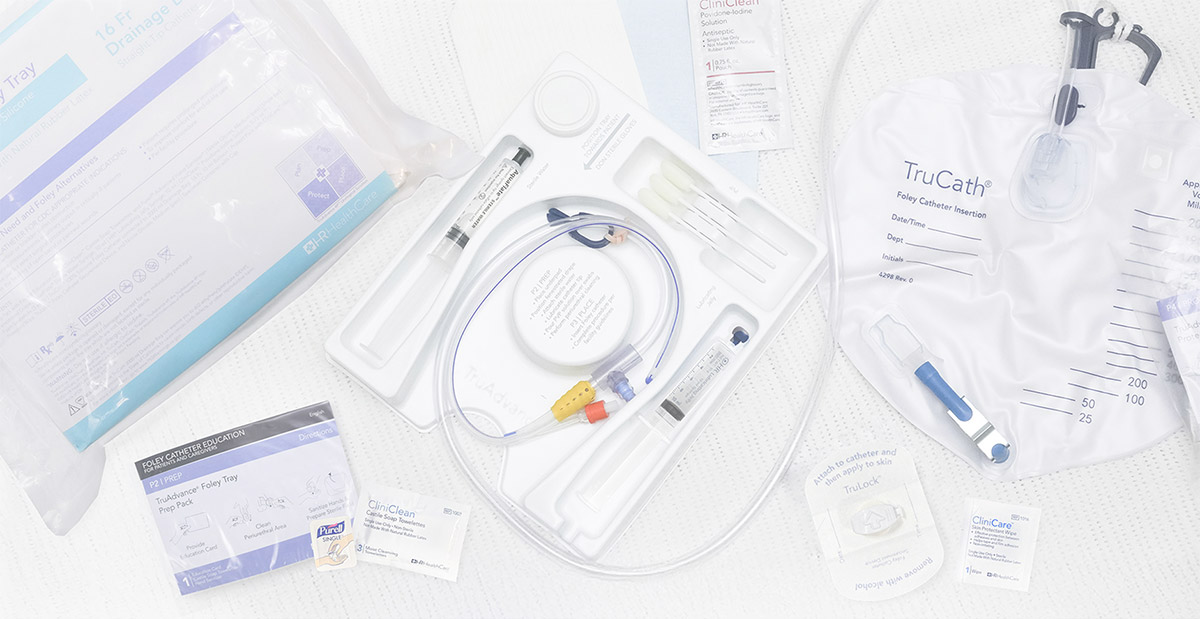
The TruAdvance 4P Urological Solution delivers standardized, evidence-based bladder management to streamline workflows, support infection prevention, and enhance patient safety. Featuring intuitive nurse-focused Foley trays, innovative Foley alternatives, and practical education, it empowers clinicians, minimizes care variability, and drives consistent, patient-centered outcomes.
The HR HealthCare Urological Solution integrates specialized bladder management products, proprietary order technology, and coordinated supply services to simplify care coordination. This ecosystem empowers healthcare teams, patients, and caregivers with consistent support across the care continuum.
Prioritize Intentional Decisions Guides clinicians in assessing patient needs and determining the most appropriate approach for bladder management.
P2 | Prep
Prioritize Thorough Preparation A focused preparation step that ensures procedural readiness by completing all necessary infection prevention measures before catheter insertion.
P3 | Place
Prioritize Precision Emphasizes consistent insertion practices with aligned product configurations and workflows.
P4 | Protect
Prioritize Proactive Maintenance Reinforces infection prevention and safeguarding patient outcomes.
Resources by Type
Video Library
Our video library features two distinct formats to support clinical learning. The first includes detailed 3D step-by-step instructional videos demonstrating the complete setup and use of Foley and intermittent catheterization trays. These immersive visuals clarify each procedural step to drive care standardization and infection prevention. The second format consists of concise how-to videos focusing on key ancillary products and processes, designed as quick refreshers to support practical application and daily clinical use.
TruAdvance Intermitent Catheter Tray
TruAdvance Intermitent Catheter Tray
Instructional Video
TruAdvance Intermitent Catheter Tray
Instructional Video
Patient Education
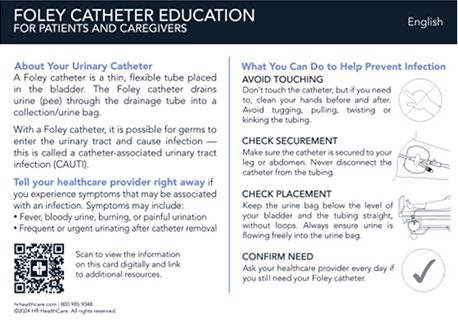
Promote effective bladder management and patient compliance. Each TruAdvance Foley Catheter Tray includes a patient education card featuring key bladder management information and a link to our dedicated Patient and Caregiver Education page. This page provides additional, detailed information designed to reinforce your clinical support and strengthen patient and caregiver understanding for better outcomes.
Centers for Disease Control and Prevention. (2024). Summary of recommendations from the guideline for prevention of catheter-associated urinary tract infections (CAUTIs). https://www.cdc.gov/infection-control/hcp/cauti/summary-of-recommendations.html
Association for Professionals in Infection Control and Epidemiology. (2025). Guide to preventing catheter-associated urinary tract infections. https://apic.org/implementation_guide/new-guide-to-preventing-catheter-associated-urinary-tract-infections-2025/
Alanazi, A. D., AlShammari, T. A., & Althobaiti, N. S., et al. (2023). Healthcare workers’ compliance with the catheter-associated urinary tract infection prevention guidelines. BMC Infectious Diseases, 23(1), Article 1107. https://doi.org/10.1186/s12879-023-08137-y
Centers for Disease Control and Prevention. (2025). Urinary tract infection prevention and surveillance: Catheter-associated urinary tract infection (CAUTI) 104-508 (NHSN Patient Safety Component Manual). U.S. Department of Health and Human Services. https://www.cdc.gov/nhsn/pdfs/pscmanual/7psccauticurrent.pdf